The most common anchor failure we see in Scottsdale isn't a sudden snap under load. It's the slow, almost invisible creep that happens when a passive anchor gets seated in decomposed granite that looked solid during drilling but loses bond strength after the first monsoon rain. Contractors coming from Phoenix often treat the granite here like a uniform rock mass, but in Scottsdale, particularly east of the 101 where the McDowell Mountains weather into the basins, you get pockets of grus—that crumbly, feldspar-rich sand—interlayered with hard caliche stringers. Our lab has pulled enough anchors from the DC Ranch and Grayhawk subdivisions to know that a one-size-fits-all bond length calculation from a textbook doesn't survive contact with this geology. We combine site-specific pullout tests with laboratory grain-size analysis to dial in the grout-to-ground bond, and for active systems in silty terrace deposits along the Indian Bend Wash, we often recommend complementing the design with a seismic refraction survey to map the depth to competent bearing before locking off the tendon.
An anchor is only as reliable as the grout-to-ground bond in the specific geological unit—Scottsdale's decomposed granite and caliche layers demand site-specific pullout verification, not textbook assumptions.
How we work
Local ground factors
The geotechnical contrast between northern Scottsdale, where large granite boulders in a sandy matrix define the Pinnacle Peak area, and southern Scottsdale, with its finer alluvial deposits near Tempe, creates very different anchor failure mechanisms. Up north, we see loss of grout confinement when the drill hole intersects cobble zones—the grout simply flows into the voids around the boulders, leaving the tendon partially unbonded. Down south, the risk shifts to long-term relaxation in the silty sands, where passive anchors can lose 15% of their lock-off load within the first 18 months due to particle rearrangement under sustained tension. For temporary excavation support along the Loop 101 corridor, where groundwater can be as shallow as 12 feet in the wash crossings, we design active anchors with regroutable tube systems—a detail that adds upfront cost but prevents the much larger expense of a wall movement that damages adjacent utilities or pavement. Every anchor we design includes a lift-off test program at 6 and 12 months post-installation to verify that residual load remains within the acceptable range.
Reference standards
IBC 2021 Chapter 18 — Soils and Foundations, ASCE 7-22 — Minimum Design Loads for Buildings and Other Structures, PTI DC35.1-14 — Recommendations for Prestressed Rock and Soil Anchors, ASTM A416/A416M — Standard Specification for Low-Relaxation Seven-Wire Steel Strand, ASTM C109/C109M — Standard Test Method for Compressive Strength of Hydraulic Cement Mortars, OSHA 1926 Subpart P — Excavation Safety Requirements
Complementary services
Active Anchor Design for Excavation Support
For shoring walls deeper than 12 feet in Scottsdale's mixed alluvium and weathered rock, we design active post-tensioned anchors with staged lock-off sequences. We specify the drill diameter, grout mix for the target UCS, unbonded length to isolate the tendon from the active zone, and the lift-off testing protocol to confirm load transfer. Our designs account for the presence of caliche layers that can deflect the drill bit and create misalignment if not anticipated in the pre-construction investigation.
Passive Anchor Systems for Retaining Walls and Slopes
In the hillside communities of Troon and Silverleaf, we design passive anchors—often fully grouted threadbars—for soldier pile walls and slope stabilization. These systems mobilize resistance through deformation, so our design focuses on the strain compatibility between the anchor, the grout column, and the surrounding decomposed granite. We perform pullout tests on sacrificial anchors installed at representative locations to validate the bond stress assumptions before production drilling begins.
Typical parameters
Common questions
What is the difference between an active anchor and a passive anchor?
An active anchor is post-tensioned after grouting—we apply a lock-off load immediately using a hydraulic jack, which actively compresses the ground or the wall. A passive anchor is not tensioned during installation; it develops its resisting force only when the structure moves enough to stretch the tendon. In Scottsdale, we typically specify active anchors for shoring walls where we want to minimize lateral deflections, and passive anchors for slope stabilization where some movement is acceptable and the anchor is fully grouted along its entire length.
How deep do anchors need to go in Scottsdale's soils?
The bond length depends entirely on the subsurface conditions at the specific site, but in the decomposed granite common across much of Scottsdale, we typically achieve design bond stresses of 40 to 80 psi. That translates to bond lengths ranging from 15 to 30 feet beyond the critical failure surface. In the caliche layers found in the Paradise Valley area, bond stresses can be higher—sometimes up to 120 psi—which shortens the required embedment. We determine the exact length through pullout tests on site-specific sacrificial anchors.
How much does anchor design and testing cost in Scottsdale?
Anchor design and testing in Scottsdale generally ranges from US$900 to US$3,680, depending on the number of anchors, the complexity of the subsurface conditions, and whether both design and field pullout testing are included. A small project with a few passive anchors on a single-family lot will be at the lower end, while a commercial excavation with multiple rows of active tiebacks requiring load cells and long-term monitoring will be at the upper end.
What corrosion protection do anchors need in Scottsdale?
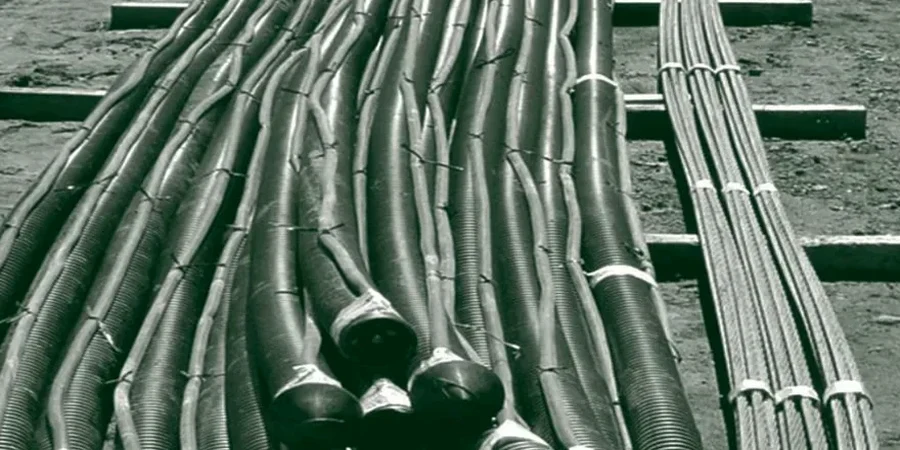
For permanent anchors in Scottsdale, we specify Class I corrosion protection per PTI DC35.1, which includes a corrugated plastic duct filled with grout surrounding the tendon, plus an outer grout column. This double-encapsulation is essential given the high sulfate content in some of our desert soils and the proximity to irrigation systems that keep the upper soil zone moist year-round. For temporary anchors with a service life under 24 months, Class II protection—a single grout column with adequate cover—is generally sufficient.