Scottsdale’s desert pavement sees 115°F summers and sudden monsoon deluges. That extreme swing—from baked asphalt to saturated base layers in minutes—drives every flexible pavement design decision we make. The local Paradise Valley soils shift from decomposed granite to pockets of fat clay, and without a precise subgrade evaluation you’re guessing on layer coefficients. We tie our structural number calculations directly to CBR road testing to capture the exact moisture sensitivity of each bench. The city’s 240,000 residents depend on arterials like Shea Boulevard staying rut-free through triple-digit heat, so our mix designs emphasize high-temperature binder grades and drainage details that handle monsoon runoff without stripping the aggregate.
In Scottsdale, the pavement fails from the bottom up—weak subgrade saturated by a monsoon storm is the real enemy.
How we work
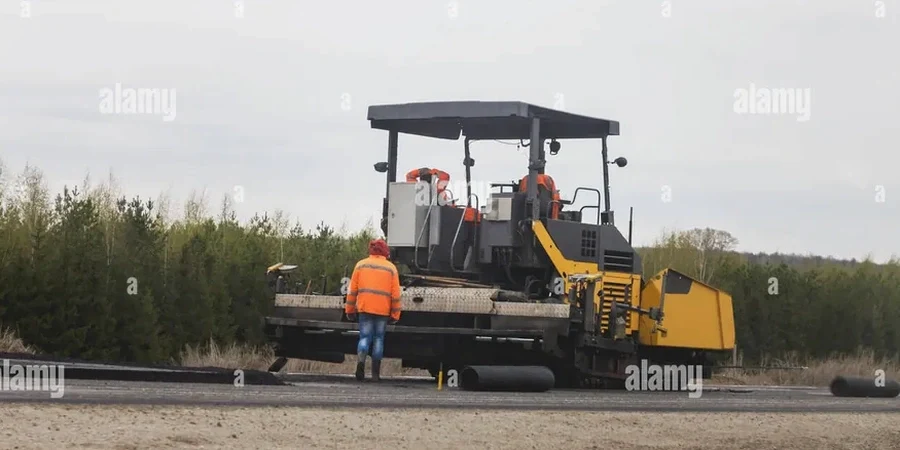
Local ground factors
The nuclear density gauge sits on the fresh lift, and the reading spikes after a cloudburst. That’s the moment we plan for. Scottsdale’s monsoons transform a well-compacted base into a saturated sponge in under an hour. If the prime coat wasn’t cured fully or the subgrade had a pocket of untreated expansive clay, you get stripping at the asphalt-base interface and rutting within the first season. We see it most on collector roads near the Salt River Pima-Maricopa Indian Community, where the soil fines migrate upward under capillary action. Thermal cracking is the other persistent foe here. A 50-degree diurnal temperature swing in January opens cracks that let water in, and the cycle repeats. Our designs counter this with softer base grades and mill-and-fill strategies that account for the full seasonal range. The biggest risk is ignoring the subgrade entirely—asphalt thickness alone won’t fix a bad foundation.
Reference standards
AASHTO Guide for Design of Pavement Structures (1993 and MEPDG), ASTM D1586 Standard Test Method for Standard Penetration Test (SPT), ASTM D2487 Standard Practice for Classification of Soils, IBC 2021 Section 1803 geotechnical investigations, ASTM D1883 California Bearing Ratio (CBR) of Laboratory-Compacted Soils
Complementary services
Subgrade evaluation and CBR testing
Field and lab CBR testing on moisture-conditioned samples to establish the design Mr for each soil unit encountered.
Pavement structural design per AASHTO
Layer thickness and material specification using the AASHTO 1993 empirical method, with MEPDG calibration for local climate data.
Drainage and base course specification
Design of aggregate base gradation, permeability, and edge drainage details to handle Scottsdale’s monsoon runoff rates.
Typical parameters
Common questions
What asphalt thickness is typical for flexible pavements in Scottsdale?
Most residential and collector streets in Scottsdale use 2 to 3 inches of hot-mix asphalt over a 6- to 10-inch aggregate base. Arterial roads with higher ESAL counts may go to 4 or 5 inches. The exact section depends on the subgrade CBR and the structural number required per AASHTO design tables.
How much does flexible pavement design cost for a Scottsdale project?
A complete flexible pavement design package—including subgrade investigation, CBR testing, and structural section recommendations—typically runs between US$1,560 and US$4,900 depending on the project length and number of soil units tested.
How do you handle expansive clays under pavement in Scottsdale?
We identify the clay through Atterberg limits and swell testing first. Then we typically over-excavate 18 to 24 inches, treat the subgrade with lime or cement stabilization, and place a thicker aggregate base to isolate the pavement from the active zone. The Indian Bend Wash corridor gets extra attention for this.
What PG binder grade is right for Scottsdale’s climate?
For most Scottsdale projects we specify PG 70-10. On high-traffic arterials with slow truck speeds, we bump that to PG 76-16 to resist rutting in the 115°F summer heat. The lower temperature grade handles winter lows around 35°F without cracking.
Do you account for monsoon flooding in the pavement design?
Yes. We design the cross-section with a minimum 2% cross-slope and include edge drains or daylighted base layers where the grade allows. The drainage coefficient in the AASHTO equation gets adjusted upward to reflect Scottsdale’s short-duration, high-intensity rainfall events.