Scottsdale's rapid expansion from a small farming community into a luxury desert metropolis placed unprecedented demands on its underlying geology. The city sits on the northern edge of the Salt River Valley, where Pleistocene alluvial fans interleave with finer basin-fill deposits. Early developers quickly learned that the picturesque desert floor concealed lenses of collapsible silty sand and loose granular strata deposited by ancient washes. A well-engineered vibrocompaction design addresses these conditions by specifying probe spacing, depth, and energy input to densify the soil mass before structural loads are applied. The process transforms loose, heterogeneous deposits into a competent bearing stratum, reducing the risk of differential settlement that would otherwise plague slab-on-grade foundations and shallow footings across Scottsdale's varied terrain.
A properly designed vibrocompaction grid in Scottsdale's alluvial soils can increase SPT N-values from single digits to over 25 blows per foot in a single pass.
How we work
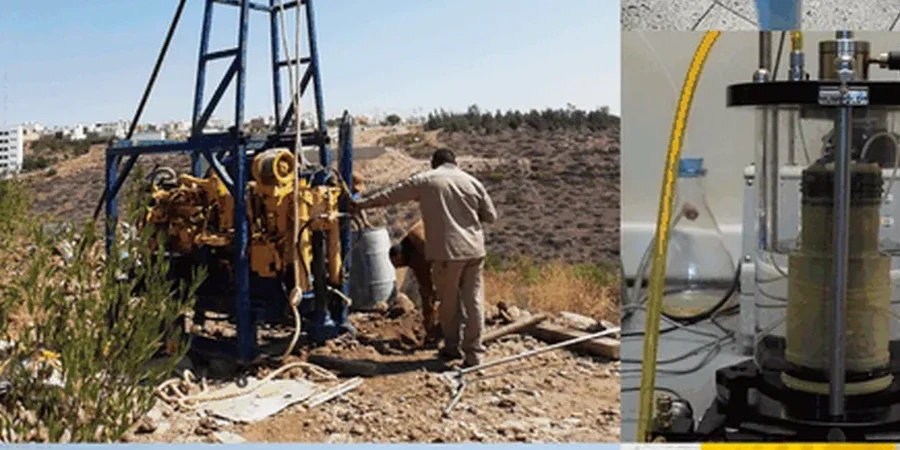
Local ground factors
The contrast between Old Town Scottsdale and the master-planned communities of DC Ranch illustrates the variability in subsurface risk across the city. Historic neighborhoods near the downtown core often sit on older agricultural land where undocumented fill, buried irrigation laterals, and decades of landscape overwatering have created perched water and softened native soils. In these areas, a vibrocompaction design that omits careful pre-treatment investigation risks encountering obstructions or zones where high silt content renders deep vibratory methods inefficient. DC Ranch, built on higher-elevation desert pavements, presents a different challenge — cemented caliche crusts that may require pre-drilling before the vibrator can penetrate to design depth. The team addresses these contrasts by specifying a dynamic compaction or stone columns alternative wherever site-specific gradation testing reveals more than 20 percent fines, ensuring the ground improvement strategy matches the actual subsurface conditions rather than a generic assumption.
Reference standards
IBC 2024 (adopted by City of Scottsdale), ASCE 7-22 Minimum Design Loads, ASTM D1586 Standard Test Method for SPT, ASTM D2487 Classification of Soils for Engineering Purposes (USCS), FHWA-NHI-16-072 Ground Improvement Methods
Complementary services
Vibrocompaction Grid Design & Depth Specification
Development of triangular or square probe layouts with energy levels and withdrawal rates calibrated to the site-specific gradation and target N-value. Includes liquefaction mitigation verification per ASCE 7.
Pre- and Post-Treatment Testing Correlation
Execution and interpretation of CPT soundings and SPT borings before and after compaction to document the achieved improvement in tip resistance and blow count, correlated to relative density.
Alternative Ground Improvement Analysis
Comparative evaluation of vibrocompaction against stone columns or dynamic compaction when fines content, depth to groundwater, or proximity to existing structures limits vibratory applicability.
Typical parameters
Common questions
What is the typical cost range for vibrocompaction design and testing in Scottsdale?
For a typical single-family residential or small commercial lot in Scottsdale, the combined design, pre-treatment investigation, and post-compaction verification testing generally ranges from US$1,580 to US$5,550, depending on the number of probe points, depth of treatment, and the extent of CPT/SPT correlation required by the project geotechnical report.
How deep can vibrocompaction effectively treat Scottsdale's desert soils?
The effective treatment depth depends on the vibrator power and soil gradation. In Scottsdale's alluvial sands with less than 12 percent fines, depths from 15 to 45 feet are routinely achieved. Deeper treatment, up to 60 feet, is possible with higher-powered rigs but requires careful evaluation of the caliche layers that often cap deeper deposits in the northern reaches of the city.
What quality control methods confirm the compaction has met the design specification?
The primary QC method is a before-and-after comparison using CPT soundings or SPT borings at the centroid of the compaction grid. Acceptance criteria are typically a minimum tip resistance of 100 to 150 tsf for CPT or an SPT N-value of 20 to 30 blows per foot, depending on the design requirements and the depth being evaluated.
Does vibrocompaction in Scottsdale require a special permit or City review?
The City of Scottsdale reviews ground improvement plans as part of the building permit process. The submittal must include a geotechnical report with the vibrocompaction design parameters, a quality control testing plan, and documentation that the method satisfies the IBC requirements for bearing capacity and settlement reduction on the specific lot.