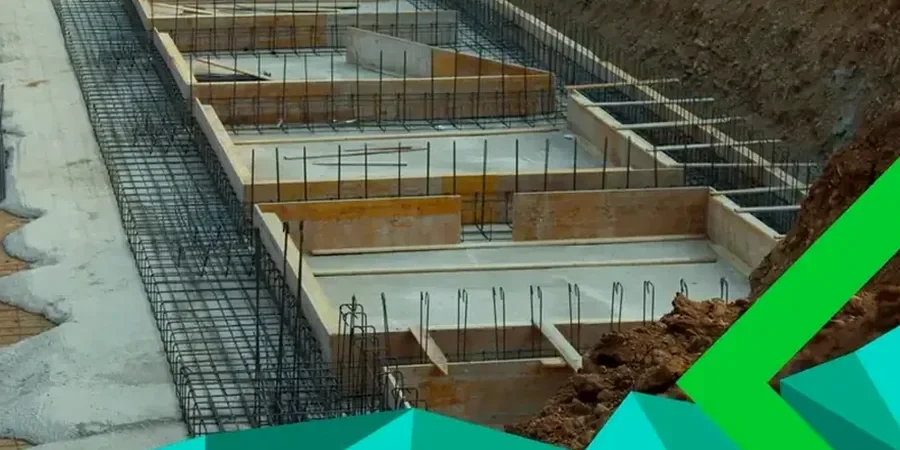
A five-story mixed-use structure off Indian School Road began showing hairline cracks before drywall was even taped. The culprit? A footing design that treated the site as uniform sand, ignoring the thin collapsible silt lenses that plague Scottsdale’s alluvial fans. Our team stepped in to redesign the footings with a ground improvement strategy that densified the upper six feet, pushing allowable bearing pressures back within IBC Chapter 18 limits. For sites where settlement tolerance is extremely tight, we often recommend a mat foundation approach, distributing column loads across a rigid slab that bridges weaker pockets without requiring deep excavation. Scottsdale’s desert geology demands more than generic bearing-capacity equations—it requires a design that anticipates suction collapse after the first monsoon soak.
Scottsdale’s collapsible silts can lose 6 to 10 percent of their volume upon wetting—ignoring that mechanism turns a 0.5-inch settlement prediction into a 3-inch reality.
How we work
Local ground factors
Scottsdale’s average annual rainfall sits below 10 inches, but the North American Monsoon delivers intense, short-duration storms that transform dry arroyos into torrents in minutes. This flash-flood regime is the primary trigger for collapse settlement in silty alluvial soils—a failure mode that has damaged light commercial buildings along the 101 corridor more often than seismic events have. While Arizona’s seismic hazard is moderate compared to California, the McDowell fault system runs less than 15 miles northeast of downtown, capable of generating a magnitude 6.5 event. Shallow foundations designed without site-specific liquefaction screening risk bearing loss in the loose sands mapped along the Salt River’s ancestral floodplain. The city’s building department now mandates a geotechnical investigation demonstrating that total and differential settlement will remain under 1 inch and 0.5 inch respectively for any structure exceeding 4,000 square feet—a threshold that captures most retail and multifamily projects breaking ground north of Shea Boulevard.
Reference standards
IBC 2021 Chapter 18 (Soils and Foundations, with Scottsdale amendments), ASCE 7-22 Minimum Design Loads for Buildings and Other Structures, ASTM D1586 Standard Test Method for SPT and Split-Barrel Sampling of Soils, ASTM D5333 Standard Test Method for Measurement of Collapse Potential of Soils, ACI 318-19 Building Code Requirements for Structural Concrete, Chapter 13
Complementary services
Collapsible Soil Mitigation Design
We design pre-wetting programs, dynamic compaction grids, and over-excavation/replacement sequences that achieve the IBC-mandated 90 percent relative density in the upper bearing zone. Our reports include moisture-conditioning curves, lift thickness specifications, and proof-rolling acceptance criteria tailored to Scottsdale’s silty-sand gradations.
Settlement Analysis and Footing Optimization
Using Schmertmann’s method calibrated with site-specific SPT and CPT data, we calculate immediate and consolidation settlement under dead-plus-live load combinations. We then optimize footing dimensions—strip, spread, or combined—to keep differential settlement below 0.5 inches across column lines, a limit that Scottsdale plan reviewers enforce strictly for masonry-bearing structures.
Typical parameters
Common questions
What does a shallow foundation design cost for a Scottsdale commercial building?
A complete package—including two borings to 20 feet, laboratory collapse-potential testing, bearing capacity and settlement calculations, and a stamped report—runs between US$2,100 and US$3,340 for a typical retail or office footprint under 10,000 square feet. Larger sites requiring additional borings or CPT soundings will fall at the upper end of that range.
Does Scottsdale require a geotechnical report for single-family residential permits?
Yes. The City of Scottsdale amended its building code to require a soils investigation for all new residential construction. At minimum, the report must address expansive or collapsible soil potential, offer an allowable bearing pressure, and recommend foundation type. Homes on lots graded into hillside terrain north of Bell Road often need additional slope stability analysis.
How deep do footings need to be in Scottsdale to avoid heave or collapse?
The IBC minimum is 12 inches below undisturbed ground surface, but Scottsdale’s geotechnical design memorandum pushes that to 18 inches for most residential work and 24 inches for commercial structures. The controlling factor is usually not frost depth—Scottsdale’s frost line is negligible—but rather the need to get below the zone of seasonal moisture fluctuation that drives both shrink-swell and collapse behavior in the upper silty sands.
Can shallow foundations be used on Scottsdale sites with high collapse potential?
Yes, provided the collapsible layer is either removed or treated. Our standard approach is to over-excavate the upper 4 to 6 feet of collapse-prone soil, moisture-condition it to near optimum, and recompact in controlled lifts. We verify the result with post-compaction SPTs or nuclear density tests, demonstrating that the treated zone meets the 90 percent relative density criterion before footings are placed.